
Learning from the 2025 Annual Safety Review: What Do the Numbers Really Mean for Operators?
On 26 August 2025, EASA published the latest Annual Safety Review. It provides a wealth of data about accidents, serious incidents, and safety trends across Europe.
But what do these numbers really mean for airlines, CAMOs, Part-145 organisations, ground handlers, and flight schools?
Too often, safety reviews are read once and then left on the shelf. The real value comes when operators use the data to guide everyday decisions.
The Headlines from the 2025 Annual Safety Review
The latest Annual Safety Review confirms that:
Runway excursions remain the leading type of accident outcome in commercial air transport.
Aircraft upsets continue to feature as a top risk area.
Cabin crew and ground staff injuries have increased, especially from turbulence, slips/falls, and engine suction events.
Serious incidents (where safety margins are reduced) carry much of the risk, often more than minor accidents.
These findings are not new, but they show where the real risks still lie.
Why Operators Should Pay Attention
For operators, the question is not “what happened in Europe overall”, it’s “what does this mean for us?”
Airlines → Review runway excursion prevention programs, stabilized approach policies, and crew training.
CAMOs and Part-145 → Look at maintenance human factors. Many cabin/ground injuries link back to maintenance practices, equipment, and task design.
Ground handlers → Injury data shows the need for training refreshers and risk awareness campaigns.
Flight schools and small operators → Don’t dismiss the Annual Safety Review as “only for the big airlines.” Many of the same risks (loss of control, excursions) happen at every scale.
From Statistics to Action
So how do you turn a 200-page report into practical safety action?
Pick one theme from the Annual Safety Review that is relevant to your operation.
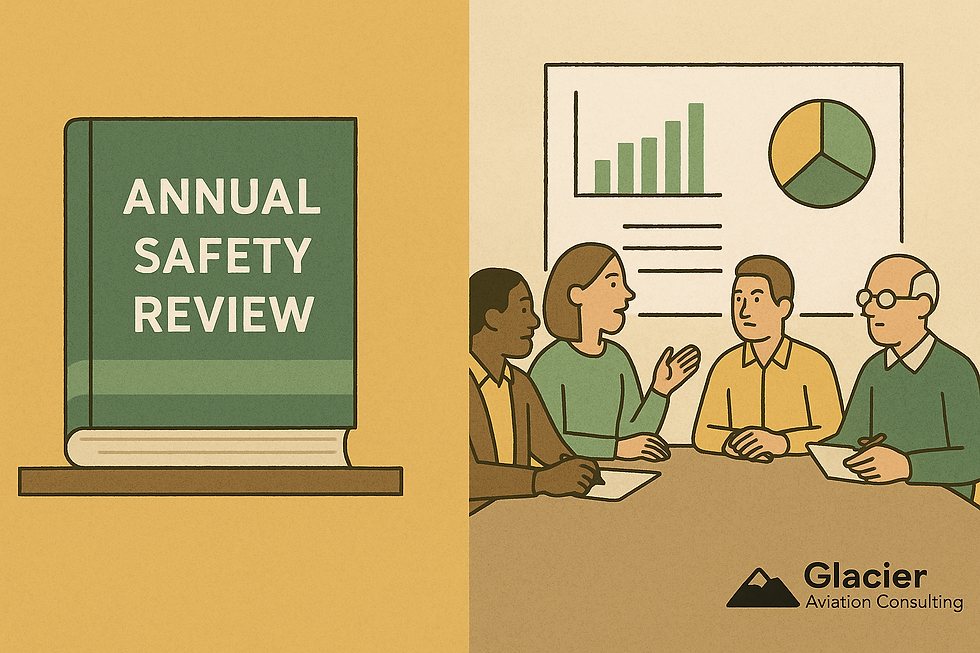
Bring it to your next safety meeting → show the data, ask “could this happen here?”
Run a quick risk assessment → what procedures, training, or tools help reduce this risk locally?
Communicate back to staff → show how global data is shaping local action.
When numbers translate into awareness, and awareness into action, the Annual Safety Review truly adds value.
Connection with EPAS
The Annual Safety Review also feeds directly into the European Plan for Aviation Safety (EPAS 2023–2025). That’s why the same themes, resilience, SMS in Part-145, safety culture, and reporting, appear in both documents.
By aligning local safety programs with Annual Safety Review data and EPAS priorities, operators show they are not just compliant, but proactive.
Takeaway
The 2025 Annual Safety Review is not just a regulatory product. It is a free tool for learning and improvement.
Operators who use the data proactively strengthen their safety culture — and protect both people and reputation.
👉 Discussion point: Do you use the Annual Safety Review in your organisation’s safety meetings or training? If so, how?


Comments